



















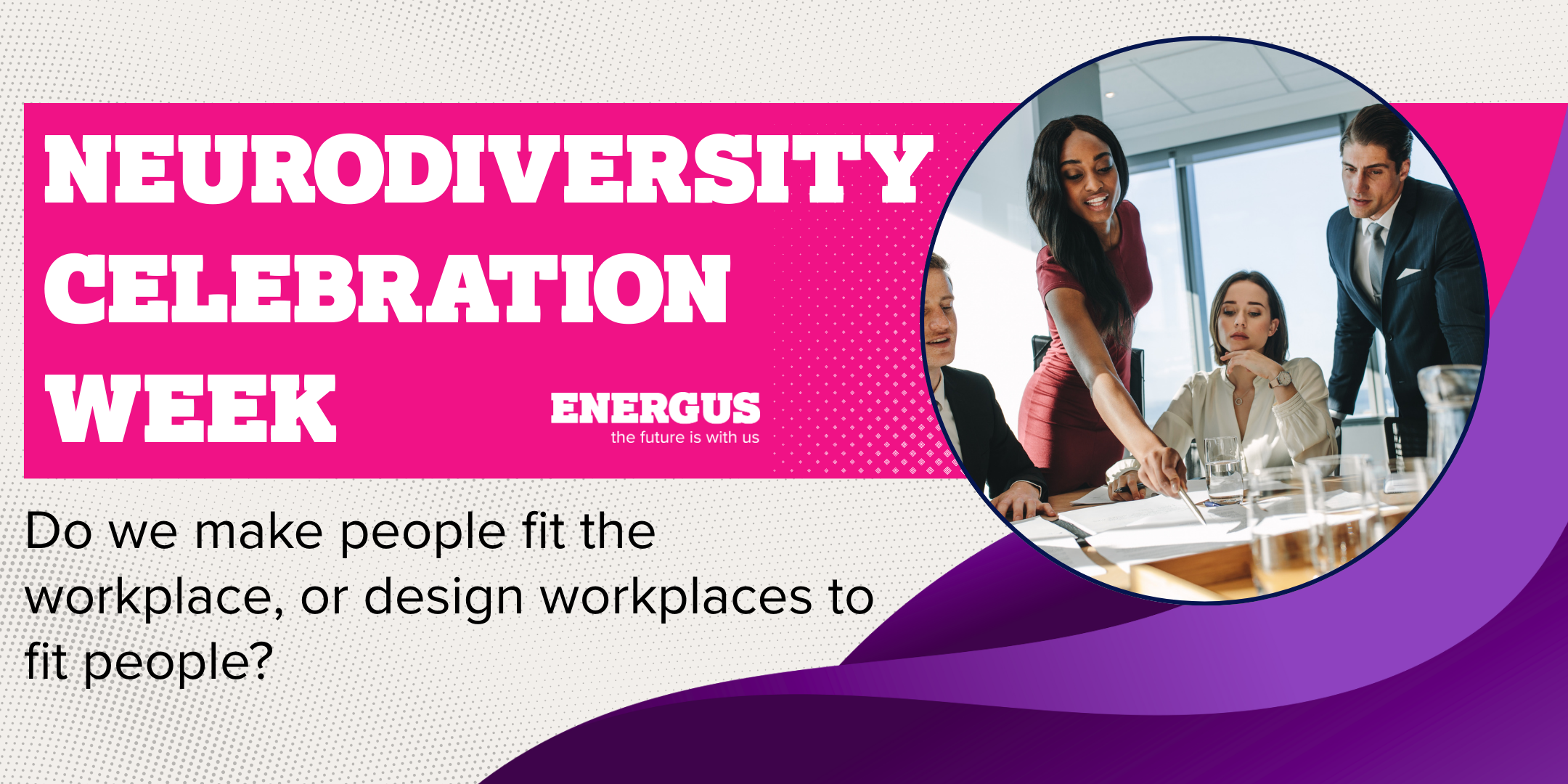
Do we make people fit the workplace, or design workplaces to fit people?
One of the most important questions organisations can ask when thinking about inclusion is a simple one.
Do we expect people to fit the workplace, or should workplaces be designed to fit people?
For many years, employment systems have largely expected individuals to adapt to existing structures, processes and environments. For some people this works well. For others, particularly those who are neurodivergent or disabled, it can create unnecessary barriers.
Increasingly, organisations are recognising that inclusion requires a shift in perspective. Rather than expecting individuals to continually adapt, workplaces can be designed in ways that are accessible and supportive for a wider range of people from the outset.
At Energus, this thinking underpins much of the work taking place around disability inclusion and the organisation’s commitment as a Disability Confident Leader.
Creating inclusive environments means thinking about accessibility, communication styles, learning approaches and workplace culture. It means ensuring that policies, environments and working practices do not unintentionally exclude people.
However, inclusion does not stop at designing accessible systems. There will always be situations where individuals need specific support or reasonable adjustments to enable them to thrive.
This is why Energus takes an approach that works in both directions. The organisation aims to design workplaces and programmes that are inclusive and accessible by default, reducing the need for individuals to request adjustments wherever possible. At the same time, when people do require additional support, a person-centred approach ensures that adjustments are tailored to the needs of the individual.
Through partnerships such as training delivered by Better Bodies UK, organisations can build greater understanding of neurodiversity, disability and workplace wellbeing. This helps managers and teams feel more confident in creating environments where everyone can contribute and succeed.
Inclusion is not about choosing between adapting people or adapting workplaces. It is about recognising that thriving workplaces are those that are flexible enough to do both.
